Lighting a Candle to Counter an ICE Storm
As a follow-up to It's Ok to Look Away
I'm as guilty as the next person.
I confuse spending too much time consuming the specifics of events as if I need to know more to respond.
I tell myself that sharing information about current events online and arguing in the comments is at least marginally useful. 99.999% of the time it's not.
These things get in the way of the real action that we need in this moment. Here are some concrete actions you can take. Doing your part helps the cause and helps you avoid feelings of anxiety or powerlessness.
Protests
This is a place to start. Showing up en masse is a visible sign to others and helps you feel a sense of community. It can encourage others and should be a springboard for further action
Demand Congress not pass DHS Funding
Another government shutdown is looming. There is a funding bill in the Senate that covers DHS. Senate Democrats have stated the bill will not pass unless more controls are put in place to hold ICE accountable.
Work Slow Down
Do some research on work slowdowns, or work to the rule. Some people can't afford to risk a strike but may be able to take steps to slow economic output at work. Work to the rule speaks to doing things slowly and deliberately, and to following every bureaucratic rule we often skip to get things done quicker.
On some level, work slowdowns are also a natural effect of the chaos we face in our nation in times like these. Who hasn't been affected by the news enough to be at least a little distracted?
Be aware of the risk and your ability to take it.
Economic Slowdown
This one is simple. Cut spending on non-essentials as much as possible. If you do spend, try to support local businesses. The collective negative economic impact not only sends a strong signal it also helps you be more prepared to weather financial troubles or participate in a general strike.
General Strike
No work. No school. No shopping. More will be called for. A day here, a day there, likely increasing in frequency or length if needed. Think about how you can participate. Remember the long term risk of not changing our trajectory when you are considering your short term risks.
Organize
Get with people to coordinate response and care for each other.
Start in your neighborhood. Talk to people you know about what's going on. Discuss how you can be there for each other. Find out what else they are doing. Grow your circle.
Find existing groups in your area. Minneapolis' stellar response is in large part due to the coalition of groups coordinating resources. Labor unions, faith groups, immigrant-rights organizers, renters’ unions, transit workers, educators, and small business owners.
Be Prepared
Something we all can do. If you have little ability to take part in other actions, this is the place to start.
This year is going to be a bumpy ride. Imagine disruptions in work, the economy, or anything that could impact your ability to get by. How well prepared are you to take care of yourself or your family? What can you do to start addressing that gap?
Focus on finances prepares you for any work disruptions and helps you deal with
I'm also focusing on my health. Maintaining good physical health can help avoid the need for health care. It is also the basis for good mental health, something that will be strained if things get tougher.
Along the same lines, don't forget medication. My daughter is diabetic. I told her to stock up on supplies. If there are disruptions to supply chains or financial communications, you don't want to get caught short of life-saving medical supplies.
Light Your Candle
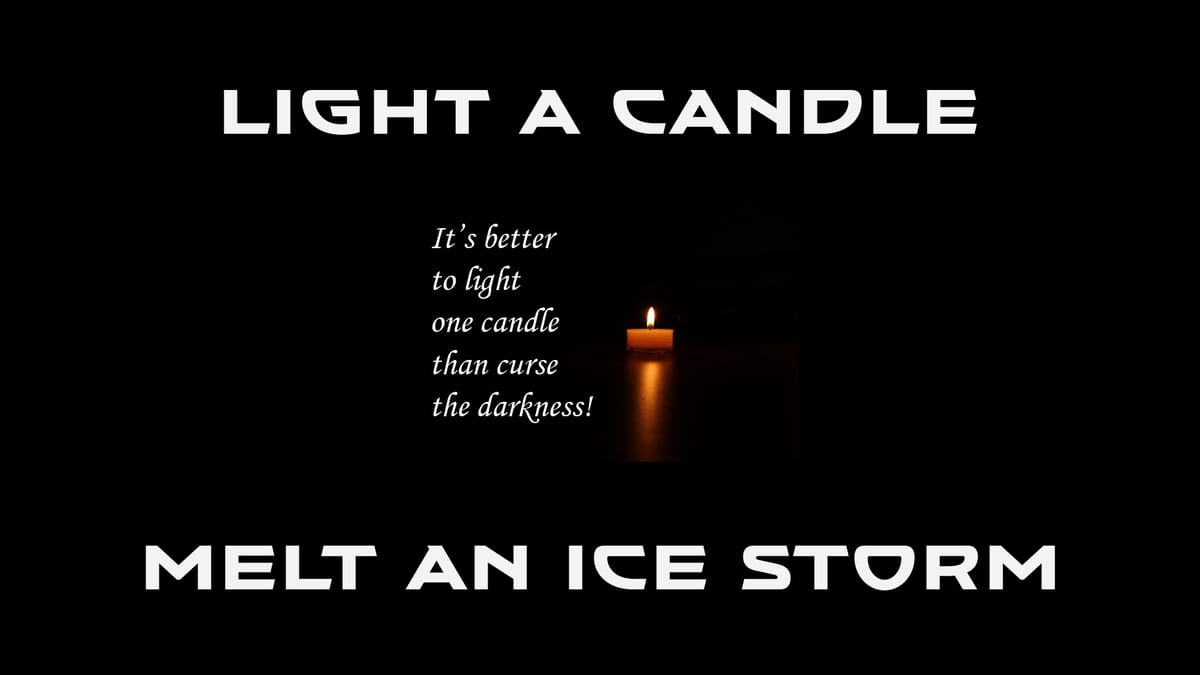
Against a blizzard, one candle doesn't seem like much, but it's what we've got, and together we've got a lot. These types of activities are more common than you'd think in other parts of the world. Do some digging, get some ideas, and get inspired, then dig in.
T